
 0
0
 0
0
A Game That Became More Than Entertainment
Few online games have managed to transcend their original purpose as entertainment and become cultural phenomena. Fortnite stands as one of the clearest examples of this transformation. Since its rise, the game has evolved from a competitive battle royale into a digital space where gaming, social interaction, creativity, and pop culture intersect. Its continued relevance is not accidental; it reflects deliberate design choices and an evolving understanding of player behavior.
This article explores why Fortnite remains dominant in online gaming culture despite intense competition and rapidly changing trends. Rather than focusing solely on gameplay mechanics, it examines how Fortnite adapts to cultural shifts, supports community creativity, and positions itself as more than a traditional game. By understanding the factors behind Fortnite’s longevity, it becomes clear why the game continues to attract new players while retaining long-time fans. Fortnite’s success offers insight into how modern games operate not just as products, but as living digital ecosystems.
How Fortnite Redefined the Online Multiplayer Experience
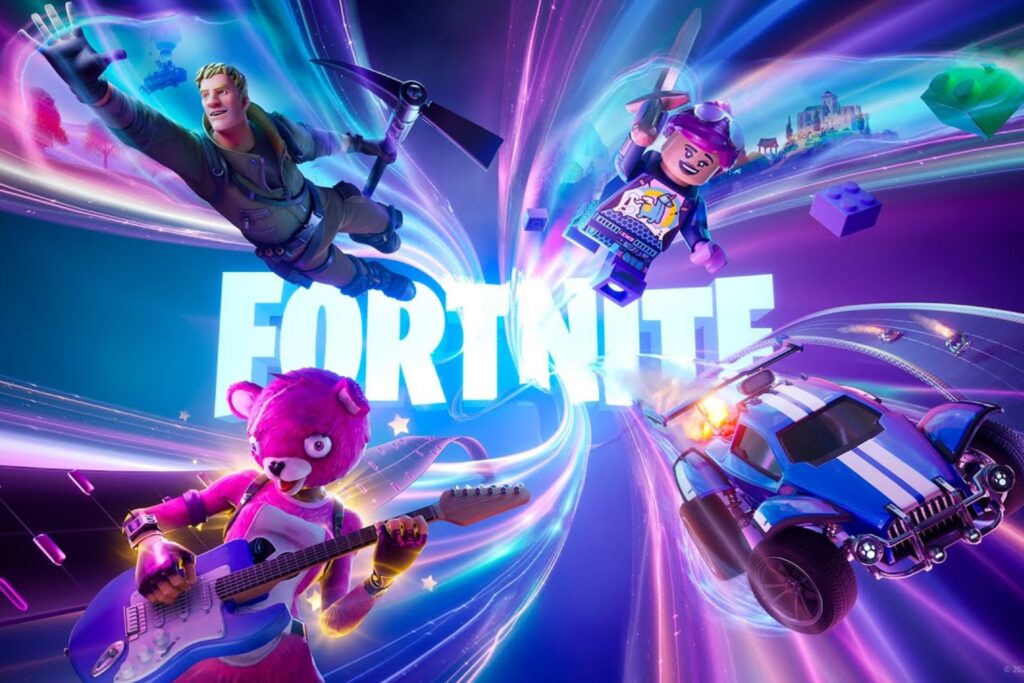
Fortnite’s early success came from accessible gameplay combined with a distinctive visual style. Unlike many competitors that leaned toward realism, Fortnite adopted a colorful, animated aesthetic that appealed to a broad audience. This design choice lowered entry barriers and made the game approachable to players of varying ages and skill levels.
Beyond appearance, Fortnite redefined interaction within online multiplayer environments. The building mechanic introduced strategic depth without relying solely on weapon skill. Players were encouraged to think creatively under pressure, blending combat with construction in ways that felt fresh and unpredictable. This balance of simplicity and complexity allowed the game to remain engaging without becoming intimidating.
Within online gaming culture and community trends, Fortnite also stood out for its emphasis on shared experiences. Events such as in-game concerts, live story developments, and collaborative challenges transformed matches into communal moments. These experiences blurred the line between gameplay and social interaction, positioning Fortnite as a space to gather rather than just compete. By fostering connection alongside competition, Fortnite reshaped expectations for what online multiplayer games could be.
Constant Evolution as a Strategy for Longevity
One of Fortnite’s defining strengths is its commitment to continuous change. Unlike games that remain static after launch, Fortnite operates as an evolving platform. Seasonal updates introduce new mechanics, map changes, and narratives that keep the experience dynamic. This evolution prevents stagnation and gives players a reason to return regularly.
The game’s developers understand that novelty drives engagement. Limited-time modes and rotating features create urgency without permanently altering the core experience. Players are encouraged to experiment, adapt, and explore new content without feeling overwhelmed by permanent complexity.
From the perspective of trends in online multiplayer games, Fortnite’s update model has influenced the broader industry. Live-service approaches are now common, but Fortnite demonstrated how consistent updates could coexist with balance and accessibility. Importantly, these changes are often framed as events rather than patches, reinforcing the idea that Fortnite is an ongoing narrative rather than a static product.
This adaptability allows Fortnite to respond quickly to player feedback and cultural moments. By remaining flexible, the game stays relevant even as player expectations evolve.
Creative Expression and Player-Driven Identity
Fortnite’s appeal extends beyond competition into self-expression. Cosmetic customization plays a significant role in how players engage with the game. Skins, emotes, and creative tools allow individuals to project identity and personality within the digital space.
Unlike pay-to-win systems, Fortnite’s monetization focuses primarily on appearance rather than performance. This approach preserves competitive fairness while supporting creative expression. Players invest in customization because it enhances their presence, not their advantage.
Within online gaming culture and community trends, Fortnite’s Creative Mode represents a major innovation. It allows players to design maps, games, and experiences within the Fortnite universe. This shift transforms players from consumers into creators, fostering a sense of ownership and collaboration.
Creative expression strengthens community loyalty. Players are not just participating in a game; they are contributing to a shared environment. This dynamic deepens engagement and extends Fortnite’s relevance beyond traditional gameplay cycles.
Fortnite as a Social and Cultural Platform
Fortnite’s role as a cultural platform sets it apart from most online games. Collaborations with musicians, film franchises, and global brands position Fortnite at the intersection of entertainment and gaming. These partnerships feel integrated rather than intrusive, enhancing immersion instead of disrupting it.
Social interaction is central to Fortnite’s design. Voice chat, squad play, and shared events encourage communication and cooperation. For many players, Fortnite functions as a virtual meeting space where friendships form and persist beyond matches.
Insights often discussed on The John Bird Blog highlight how digital spaces increasingly mirror real-world social environments. Fortnite exemplifies this shift by offering experiences that extend beyond competition. Its events are attended not just for gameplay rewards, but for participation in shared moments.
This social dimension contributes significantly to Fortnite’s staying power. When a game becomes a place to connect, it maintains relevance even as individual preferences change.
Challenges and Adaptation in a Competitive Industry
Despite its success, Fortnite operates in a highly competitive industry where player attention is fragmented. New games emerge constantly, each offering unique mechanics or experiences. Fortnite’s continued dominance requires careful balance between innovation and familiarity.
Maintaining accessibility while introducing new content is an ongoing challenge. Too much change risks alienating casual players; too little risks boredom. Fortnite’s ability to navigate this tension reflects strong design discipline and responsiveness to community feedback.
Within trends in online multiplayer games, Fortnite’s resilience illustrates the importance of adaptability. The game evolves without abandoning its core identity. This balance allows it to remain recognizable while staying fresh.
By acknowledging challenges rather than ignoring them, Fortnite demonstrates how long-running online games can sustain relevance in an industry defined by rapid change.
Conclusion
Fortnite’s dominance in online gaming culture is the result of deliberate evolution, creative freedom, and social integration. By redefining multiplayer interaction, embracing continuous change, and empowering player creativity, Fortnite has positioned itself as more than a game—it is a digital ecosystem. Its influence within online gaming culture and community trends reflects broader shifts in how people interact, express identity, and connect through digital spaces. When viewed alongside thoughtful insights on how digital communities evolve, Fortnite’s success becomes a case study in adaptability rather than luck. The game’s ability to remain relevant in a crowded industry highlights the importance of community-driven design, cultural awareness, and ongoing innovation. As online gaming continues to evolve, Fortnite stands as a benchmark for how interactive experiences can grow, adapt, and endure.


